Furthermore, AUREO1a LOVa reacts with conformational changes in response to BL exposure allowing homodimerisation and enhanced DNA binding. Thus it seems likely that the observed light dependent physiological effects originate primarily from a BL induced functionality of AUREO1a. One important feature of our work is the finding that, although four different aureochromes are expressed in P. tricornutum, the silencing of a single aureochrome gene cannot be compensated. This indicates that the individual aureochromes might have discrete functions similar to the AUREO1 and 2 proteins of V. frigida. This is further supported by the observation of differential circadian gene expression patterns of the aureochromes of Thalassiosira pseudonana and by our finding of four distinct groups of aureochromes thar feature group specific homologous regions. Group 1 and 2 correspond to the respective aureochromes of V. frigida described by Takahashi et al., while the other two groups 3 and 4 are dominated by diatom aureochromes, raising the question whether diatoms might possess exclusive classes of aureochromes associated with diatom specific functions. This notion is also supported by the observation that P. tricornutum, like the diatoms P. multiseries and F. cylindrus, possesses at least one aureochrome of each group. If this pattern is confirmed in future research, a re-evaluation of the current aureochrome nomenclature might be appropriate. A preceding study on the physiological characterisation of P. tricornutum in response to different light qualities revealed that the quantum requirement of biomass production was significantly SU5416 increased in WT cells under ML RL conditions compared to all other tested culture conditions. Although monochromatic RL conditions are artificial and do not occur naturally, this demonstrated that chromatic acclimation can affect the overall cellular energy balance. In contrast to WT cultures, an increased quantum requirement under ML RL conditions compared to other applied culturing conditions was not detected in aureo1a cultures. This is in agreement with the apparent acclimation of the aureochrome 1a silenced strains to increased light intensities at ML RL conditions as indicated by elevated NPQ capacity, Pmax or xanthophyll cycle pigment concentrations. Generally, no obvious disadvantage of aureo1a cultures compared to WT cells was detected using our specific experimental setup with persistent exponential growth. However, WT and aureo1a cultures were additionally grown in batch cultures revealing that aureochrome 1a silenced strains show a prolonged lag phase during batch cultivation compared to WT cultures, while no significant differences of growth rates during the exponential growth phase were detected. This indicates that the suppression of AUREO1a in P. tricornutum disturbs the initial photoacclimation after changes of 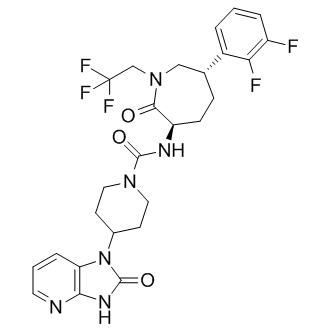 the ambient light conditions rather than the growth performance under steady state conditions. Thus, one role of AUREO1a could be the promotion of acclimation to fast changes of ambient light conditions, which are common in the natural habitat of diatoms. In this context it would be interesting to study the performance of aureo1a cultures under fluctuating light conditions. Daily changes in activity and feeding are driven by an internal timekeeping system to occur synchronously at the same time during the day. The phasing of these rhythms is dependent on the species, being increased during the night in nocturnal species and during the day in diurnal species. The internal timekeeping system drives daily rhythms in feeding and activity even under conditions lacking daytime signals, such as LY294002 citations constant darkness. Under these conditions, the rhythms exhibit approximately 24-hour periods and are thus called circadian. This mechanism not only drives the rhythms but also sets them to a proper phase.
Category: Kinase Inhibitor Library
Fundamental effort integrating computational and experimental approaches to the design of novel mosquito repellents
One QSAR pharmacophore model predicted the most favorable amide structure to consist of an aliphatic moiety and an aromatic hydrophobic moiety separated by a highly polar carboxyl group. Another 3D QSAR model defined an optimal structural pattern that consists of two oxygen atoms positioned a certain distance from each other and joined by a lipophilic moiety. Predictive models have also been derived by using multi-linear QSAR based on experimental and theoretical descriptors. Protection times of a large set of carboxamides and N-acylpiperidines were qualitatively analyzed using artificial neural networks and multiple linear regression. One more example is the study of sesquiterpenes occurring in essential oils of plants that possess remarkable insect repellent ability, sometimes comparable in efficacy to DEET. The repellents in this study were classified as early spatial, late spatial, and contact. It was also stressed that a few chemical bond separation between the hydroxyl and the hydrophobic fragments is beneficial for repellent activity. All of the above computational studies were based solely on structural characteristics of odorants. Until very recently, no valid information on putative molecular targets was available. The yellow fever mosquito, Aedes aegypti, has 66 identified odorant binding proteins, while more than 80 OBP encoding genes were found in the Anopheles gambiae genome. Recently published studies of OBP are based on available crystallographic data, biochemical assays, and in silico molecular modeling and docking. For example, ligand affinities of some benzoates and phthalates were experimentally measured for AaegOBP22 using immunofluorescence and fluorescent probe techniques. Interaction of odorants with OBPs and ORs and ORN responses are potentially attractive targets for QSAR analysis: expressed quantitatively they can be used as predictors for repellency or attraction along with theoretical and empirical molecular descriptors of natural and synthetic semiochemicals. OBPs represent the first ��selection gate�� in a multistage odor perception process. Expression, Tasocitinib purification, and crystallization are currently becoming possible for OBPs which has made the tertiary structures of some OBPs available for computer modeling. However, biological systems feasible for efficient, large-scale productions of ORs have been proposed only recently, and partial homology modeling and 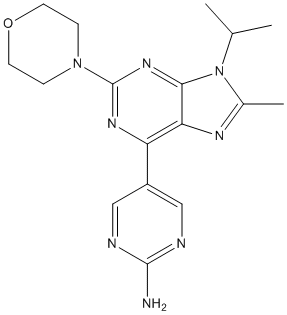 docking studies have been performed so far only for human G protein-coupled ORs. As for the neurophysiological responses, they can be quantified as currents, spike frequencies of a specific ORN, or activity changes within a set of glomeruli of the antennal lobe. The latter, for example, was recently studied along with directed and undirected movement responses for attractive odors in walking Drosophila. The search for more stable and potent repellents that are less toxic to humans and are environmentally benign is of imminent importance. Mosquitoes continue to be vectors that cause diseases such as malaria, West Nile virus, yellow fever, among others of medical and SAR131675 veterinary significance. An ideal repellent needs to be highly effective and long-lasting, while nontoxic for humans and other non-target species. It also has needs user acceptance, implying that it has benign or desirable cosmetic characteristics. Another very important issue is the cost of production and deployment, because much of the malaria threat resides in Africa and many African nations cannot afford expensive vector control tools. An integrated computational approach would be highly relevant in this regard. It can shorten discovery time and lower cost by reduction of the vast resources required for classical trial-and-error methods based on screening of large compound libraries.
Reciprocal connections to the dorsolateral prefrontal cortex and the dorsal ACC as well as to the posterior cingulate cortex
Interestingly, CD36 deficiency did not attenuate the malaria induced decrease in the reflection coefficient. Recent evidence suggests that the oncotic gradient is largely determined by the sieving properties of the glycocalyx, a complex network of surface glycopoproteins that covers the luminal surface of vascular endothelial cells and extends into the intercellular clefts. Thus, it is likely that the low salb from malaria infection indicates loss of glycocalyx integrity. This putative loss of the glycocalyx appears to be a CD36-independent event, perhaps due to the activation of an endogenous heparanase by circulating cytokines. There are additional ICG-001 iRBC-related factors that may contribute to the malaria-induced increase in fluid permeability. Macrophages have been shown to be important in phagocytizing malariainfected RBCs in the spleen and are implicated in controlling the parasite load in the lungs. It is possible that parasiteactivated macrophages or other inflammatory cells also produce ROS to cause parasite killing. In addition, Gillrie et al have shown that free merozoite proteins have an adverse effect on microvascular endothelial permeability in vitro, suggesting  that rupturing of iRBCs in lung capillaries may play a role. Further work is required to define the relative roles of CD36 ligation, ROS and other parasite-derived factors in the adverse effects on the pulmonary endothelial barrier. The in vitro data in MLMVEC monolayers and the in vivo results in malaria-infected lungs implicate Fyn kinase as a critical downstream mediator of CD36-dependent lung endothelial dysfunction. Fyn is known to regulate endothelial barrier function and to co-localize with the cytoplasmic domain of CD36 in microvascular endothelial cells. In conclusion, this study is the first to show the critical roles that CD36 and the tyrosine kinase Fyn play as mediators of the increased pulmonary endothelial permeability found in malariainfected mice. In addition, these data suggest that CD36 is necessary for the appropriate cellular compartmentalization and activation of Fyn and that infection�Cinduced ROS may serve as an enhancing factor in the mechanism that results in pulmonary edema. Although additional experiments are necessary to fully elucidate these mechanisms, our data identify new potential targets for future treatments of malaria-induced lung injury. With a lifetime prevalence of 2�C3% and a median prevalence for the total population of also 2�C3%, obsessivecompulsive disorder is one of the most frequent adult psychiatric disorders, often showing a chronic or recurrent course. The PR-171 impact of obsessions and compulsions on a person��s quality of life is considerable. In addition to the symptoms themselves, which are subdivided into different subtypes such as washing/contamination fear, controlling/checking, symmetry/ordering, hoarding, and aggressive, sexual, or religious thoughts, a number of neuropsychological impairments have been described. Neurobiological models assume an impaired serotonin and dopamine metabolism especially in the fronto-striato-thalamic system. Within these fronto-striato-thalamic loops, different feedback mechanisms are interacting with each other. The indirect loop allows for projection inhibition from thalamic to cortical regions and thus for situational appropriate and flexible behavior. It appears that in OCD patients these inhibitions of thalamo-cortical projections originating at the striatum are shifted in favor of the direct and activating loop. In more recent models, the classic fronto-striato-thalamic system that proceeds to the dorsal striatum was supplemented by a second network, including the ventral striatum and essential structures of the limbic system. The central interfaces between these systems are the orbitofrontal cortex and the anterior cingulate cortex.
HspB1 phosphorylation was roughly proportional to its level in the fractions
However, phosphorylation was less intense in the GDC-0879 pellet fraction of menadione-treated R120G cells. In menadione-treated WT cells, but not in R120G cells, a preferential phosphorylation of .gif) HspB5 in the pellet fraction was observed. Moreover, we noticed that mutant HspB5 in the pellet fraction of untreated R120G cells was less phosphorylated than its soluble counterpart. Further analysis of the phosphorylation of the different oligomeric ALK5 Inhibitor II structures of HspB1 and HspB5 confirmed the complex nature of these modifications. As already described, in HeLa as well as in control neo cells HspB1 is characterized by three subpopulations based on their serine sites specific phosphorylation and native size. However, in WT cells this structural organization was no more observed since most HspB1 interacted with HspB5 resulting in the formation of a large oligomeric complex which surprisingly contained only one HspB1 phosphorylated isoform. Hence, in spite of the fact that the N-terminal domain of HspB1 consisting of amino acids 1�C124, which bears the phosphoserine sites, has been reported to not interact with HspB5, our observations suggest that its recognition by MAPKAPK2,3 kinase is potentially impaired. Contrasting with these observations, the partial dissociation of HspB1-HspB5 complex in response to menadione was associated with the presence of the three HspB1 phosphoisoforms in the remaining complex, hence suggesting a profound reorganization of this chimeric complex. In both normal and oxidative conditions, HspB5 phosphoisoforms were mainly localized in the HspB1HspB5 complex. This suggests that HspB1 does not interfere with the kinase accessibility of HspB5 N-terminal domain. Of interest, in untreated WT cells, the small fraction of HspB1 that was not interacting with HspB5 was recovered in small oligomers that differed in their phosphorylation from those observed in control Neo cells devoid of HspB5 expression. Consequently, the formation of HspB1-HspB5 complex indirectly generated the formation of a new-type of highly phosphorylated small HspB1 homo-oligomers that could play a role in the enhanced oxidoresistance of WT cells through their ability to interact with G6PDH. The R120G mutant altered HspB1-HspB5 structural organization in such a way that most of the cellular content of HspB1 phosphoserine 15 was now recovered in the complex while this modification was not present in the complex formed with wild type HspB5. In contrast, no major changes in HspB1 phosphoserines 78 and 82 distribution were noticed. In spite of the fact that HspB1-mutant HspB5 complex was almost completely disrupted by oxidative stress, it is interesting to note that, as in WT cells, the remaining complex contained the three phosphoisoforms of HspB1. This suggests that in oxidative conditions, the N-terminal part of HspB1 can be freely recognized by the corresponding kinase. Moreover, the partial disruption of the mutant complex in cells transiently expressing HspB1 serine 15 non-phosphorylatable mutant suggests that serine 15 phosphorylation could stabilize HspB1 interaction with mutant HspB5. It is not known whether the absence of serine 15 phosphorylation in the wild type complex is due to the masking of this serine site or reflects its uselessness nature for stabilization. Within the limitation that this study has been made in a single set of HeLa-derived cell lines, the observations reported here illustrate the complex nature of the interaction between HspB1 and HspB5. It is also not known if similar interacting behavior occurs in other types of cells. Moreover, we cannot exclude that the low level of HspB6 expression detected in HeLa cells may modulate, at least to a certain extent, the structural organization of the complexes formed by HspB1 and HspB5.
HspB5 in the pellet fraction was observed. Moreover, we noticed that mutant HspB5 in the pellet fraction of untreated R120G cells was less phosphorylated than its soluble counterpart. Further analysis of the phosphorylation of the different oligomeric ALK5 Inhibitor II structures of HspB1 and HspB5 confirmed the complex nature of these modifications. As already described, in HeLa as well as in control neo cells HspB1 is characterized by three subpopulations based on their serine sites specific phosphorylation and native size. However, in WT cells this structural organization was no more observed since most HspB1 interacted with HspB5 resulting in the formation of a large oligomeric complex which surprisingly contained only one HspB1 phosphorylated isoform. Hence, in spite of the fact that the N-terminal domain of HspB1 consisting of amino acids 1�C124, which bears the phosphoserine sites, has been reported to not interact with HspB5, our observations suggest that its recognition by MAPKAPK2,3 kinase is potentially impaired. Contrasting with these observations, the partial dissociation of HspB1-HspB5 complex in response to menadione was associated with the presence of the three HspB1 phosphoisoforms in the remaining complex, hence suggesting a profound reorganization of this chimeric complex. In both normal and oxidative conditions, HspB5 phosphoisoforms were mainly localized in the HspB1HspB5 complex. This suggests that HspB1 does not interfere with the kinase accessibility of HspB5 N-terminal domain. Of interest, in untreated WT cells, the small fraction of HspB1 that was not interacting with HspB5 was recovered in small oligomers that differed in their phosphorylation from those observed in control Neo cells devoid of HspB5 expression. Consequently, the formation of HspB1-HspB5 complex indirectly generated the formation of a new-type of highly phosphorylated small HspB1 homo-oligomers that could play a role in the enhanced oxidoresistance of WT cells through their ability to interact with G6PDH. The R120G mutant altered HspB1-HspB5 structural organization in such a way that most of the cellular content of HspB1 phosphoserine 15 was now recovered in the complex while this modification was not present in the complex formed with wild type HspB5. In contrast, no major changes in HspB1 phosphoserines 78 and 82 distribution were noticed. In spite of the fact that HspB1-mutant HspB5 complex was almost completely disrupted by oxidative stress, it is interesting to note that, as in WT cells, the remaining complex contained the three phosphoisoforms of HspB1. This suggests that in oxidative conditions, the N-terminal part of HspB1 can be freely recognized by the corresponding kinase. Moreover, the partial disruption of the mutant complex in cells transiently expressing HspB1 serine 15 non-phosphorylatable mutant suggests that serine 15 phosphorylation could stabilize HspB1 interaction with mutant HspB5. It is not known whether the absence of serine 15 phosphorylation in the wild type complex is due to the masking of this serine site or reflects its uselessness nature for stabilization. Within the limitation that this study has been made in a single set of HeLa-derived cell lines, the observations reported here illustrate the complex nature of the interaction between HspB1 and HspB5. It is also not known if similar interacting behavior occurs in other types of cells. Moreover, we cannot exclude that the low level of HspB6 expression detected in HeLa cells may modulate, at least to a certain extent, the structural organization of the complexes formed by HspB1 and HspB5.
Mechanistic link between CD36-mediated sequestration of iRBCs in malaria-induced pulmonary paracellular
Take advantage of the PbA-mouse model and an isolated perfused lung system to determine the role that CD36 interactions play in the changes to pulmonary vascular permeability observed during malaria infection. We found that PbA-infected CD362/2 mice were protected from the changes in fluid conductance observed in WT animals. Employing mouse lung microvascular endothelial cell cultures, it was determined that CD362/2 endothelial cells were also protected from reactive oxygen species -induced changes in barrier integrity. In addition, Fyn, a CD36-associated tyrosine kinase, was shown to exhibit an altered intracellular distribution and activation status in CD362/2 LMVECs and to be critical for (+)-JQ1 1268524-70-4 CD36-mediated increases in pulmonary endothelial cell fluid conductance during malaria. Our results suggest that CD36 signaling through Fyn tyrosine kinase plays a significant role in mediating the detrimental changes in pulmonary endothelial barrier function during malaria infection. In addition, the data point to the possibility that parasite- or hostderived ROS serve to enhance the CD36-mediated increases in paracellular fluid conductance during malaria. These findings suggest that targeting of the CD36-iRBC interaction in the lungs of patients at risk for pulmonary complications could reduce the severity of malaria-associated acute lung injury. The observed CD36-associated effects on capillary endothelial barrier integrity could result from multiple mechanisms. Interaction with the iRBC may induce CD36-mediated signal transduction events in vascular endothelial cells that cause alterations in permeability. It is also possible that the tethered iRBC is a direct or indirect source of factors that enhance the hyperpermeabilty phenotype. For example, ROS are known to increase pulmonary microvascular permeability. ROS production has been associated with P. falciparum asexual development and implicated in the pulmonary pathology associated with severe malarial. ROS can also be derived from resident or recruited mononuclear cells as they clear iRBCs from the lungs. Here we investigated the possibility that PbAinfected RBCs were a source of ROS. It is well established that during severe malaria infection in humans, parasite-containing erythrocytes adhere to pulmonary 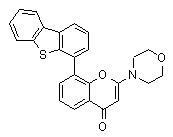 capillary endothelium and that this SAR131675 1433953-83-3 sequestration is associated with ARDS in up to 25% of adults. P. flacipariuminfected RBCs appear to use distributive interactions with CD36, ICAM1, PCAM-1 and chondroitin sulfate A to adhere to vascular endothelial cells. In murine models of human malaria, CD36 on vascular endothelial cells is the major binding partner for iRBCs. The high level of CD36 expression in the lungs results in the sequestration of large numbers of iRBCs with an attendant development of pulmonary inflammation and injury. A prominent feature of the lung pathology in humans and mice is pulmonary edema, suggesting that CD36-iRBC interactions could contribute directly or indirectly to alterations in endothelial cell barrier integrity. The results reported here support a mechanism in which iRBC interactions with CD36 initiates Fynmediated signaling that leads to an alteration in endothelial cell barrier function and pulmonary edema. In addition, our data identify parasite- or host-derived ROS as a possible contributor to this response. P. berghei infection in WT animals resulted in.10-fold increase in paracellular fluid conductance and a marked decrease in the reflection coefficient indicating failure of the endothelial mechanisms that exclude water and plasma proteins from the lungs. In striking contrast, the lungs of malaria-infected CD362/2 animals demonstrated significantly decreased water conductance when compared to WT mice, consistent with the observed lack of histological evidence of pulmonary edema after malaria challenge.